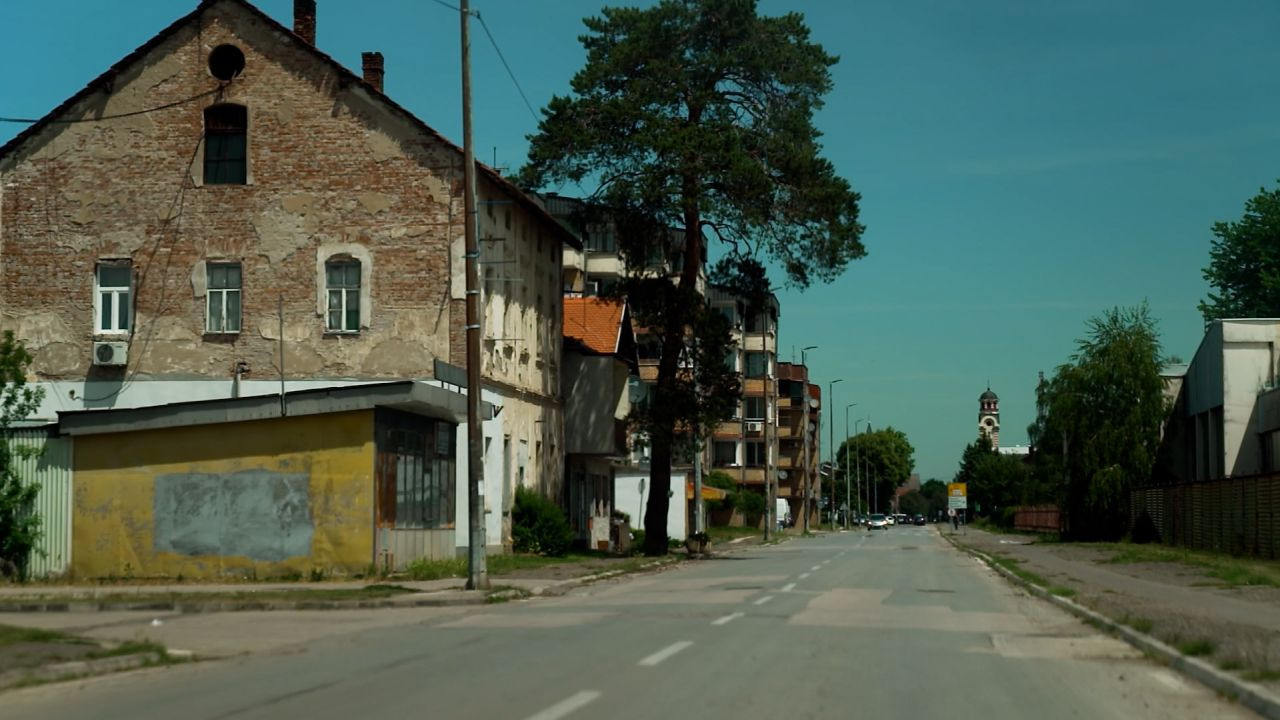
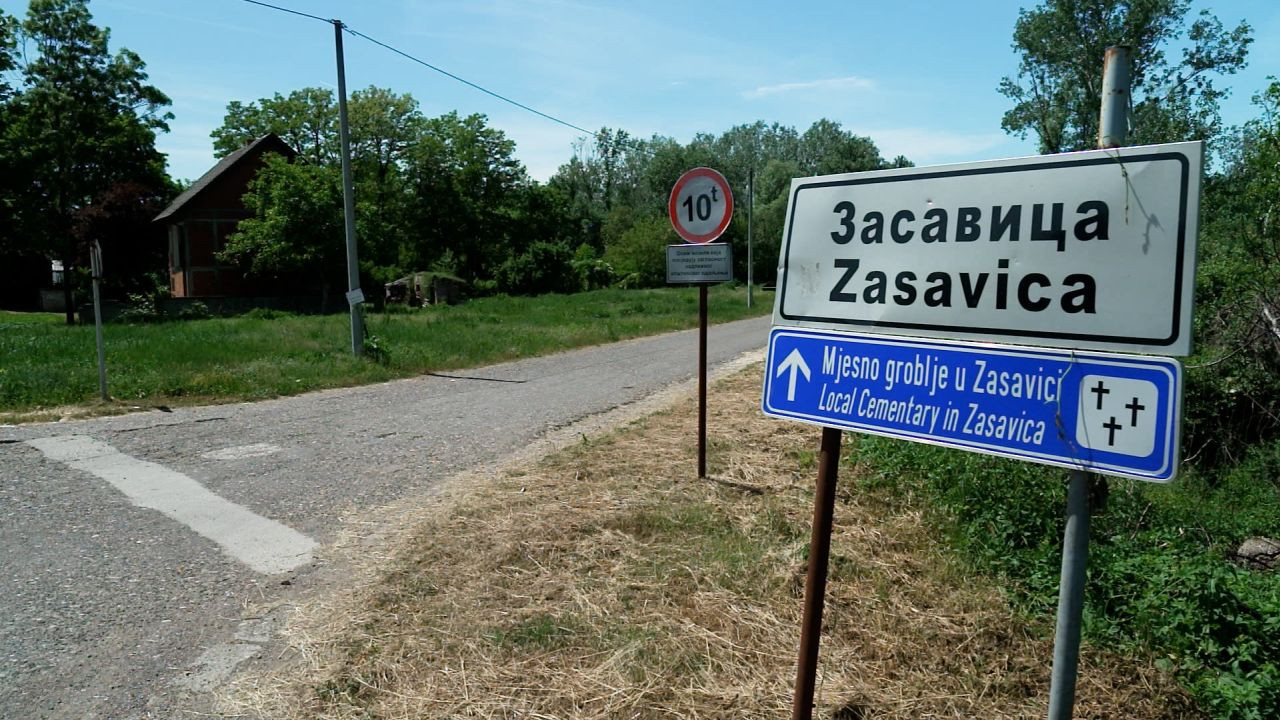
Location: Bosanski Šamac, Crkvina and Zasavica
On 17 April 1992, forces of the Army of the Republika Srpska (VRS), together with members of military units from other parts of the former Yugoslavia, violently seized power in Bosanski Šamac, including the settlements of Crkvina and Zasavica.
In 1991, out of a total population of 33,000 in Bosanski Šamac Municipality, approximately 17,000 were Bosnian Muslims and Croats. By May 1995, fewer than 300 remained.
After taking control, Serb forces, together with the paramilitary formations Red Berets and Grey Wolves, as well as members of Željko Ražnatović Arkan’s Serb Volunteer Guard, launched a campaign of terror aimed at forcing the majority Bosnian Muslim and Croat population to leave the area. Bosnian Croat and Muslim men were arrested and detained. Camps were established in which detainees were killed, beaten, tortured, sexually abused, and otherwise mistreated. Members of paramilitary units from Serbia were allowed to enter the camps and kill and beat detainees.
The camp in Bosanski Šamac consisted of several facilities within the town itself, including the Secretariat of Internal Affairs building, facilities belonging to the agricultural cooperative, the primary school building and secondary school centre, the local stadium, as well as community buildings in the village of Gornja Crkvina and the occupied village of Zasavica. From 17 April 1992 until 15 June 1993, more than one thousand Bosnian Croats and Muslims were detained in this camp. The hall in which at least 16 civilians were executed remains in use today, without any marking or mention of the crimes committed there. According to testimony before the ICTY, Slobodan Miljković, known as Lugar, was responsible for these crimes, but he did not live to stand trial, having been killed in Kragujevac in August 1998.
Before the ICTY, Snježana Delić testified that around 13 May 1992 a group of Croat women and children were arrested at the market in Bosanski Šamac and taken to Crkvina, where they were accommodated in rooms with bare floors. Jelena Kapetanović testified that she had been detained at the football stadium in Crkvina together with several hundred other persons.
A mass grave was later discovered in the territory of Gornja Crkvina.
According to ICTY judgements, the settlement of Zasavica functioned as an “open-air camp”. In the case of Simić et al., it was established that at the end of June 1992, family members of men who had fled across the Sava River to Croatia to avoid mobilisation were loaded onto military trucks, taken to Zasavica, and detained in camps there. Women, children, and elderly persons, including some men, were detained there, while some were also held in private houses.
Before the ICTY, Nusret Hadžijusufović testified that people did not go to Zasavica voluntarily and that they were not free to leave it. Witness “O” stated that people could leave Zasavica only when going to work. They were under guard, and checkpoints were located at both exits from the village. Witness “K” testified that they had been told that the surrounding areas were mined. Hajrija Drljačić stated that people could leave Zasavica only if they wanted to be exchanged.
In the ICTY judgement against the convicted Blagoje Simić, Miroslav Tadić, and Simo Zarić, it was established that from 17 April 1992 and during the following months, large numbers of non-Serb civilians were repeatedly beaten in detention facilities in Bosanski Šamac, Crkvina, Brčko, and Bijeljina. Some victims were beaten already at the time of their arrest. During their detention, detainees were brutally beaten with various objects such as rifles, metal rods, baseball bats, chains, police batons, and chair legs. Detainees were beaten on all parts of their bodies, and many sustained severe injuries. The beatings were carried out by members of paramilitary forces from Serbia, local police officers, and several members of the Yugoslav People’s Army (JNA). The beatings took place daily, both during the day and at night.
Evidence presented before the ICTY in the case of Simić et al. confirms that detainees in Bosanski Šamac were subjected to beatings, sexual harassment, and other forms of abuse, which the Tribunal qualified as part of a broader pattern of sexual violence, including rape.
Although the ICTY judgements relating to Bosanski Šamac do not contain detailed individualised descriptions of the rape of women, the transcripts and evidentiary material confirm the existence of sexual violence in detention facilities as part of a broader campaign of persecution. Particularly significant was the guilty plea of Stevan Todorović, then Chief of Police, who accepted responsibility for sexual violence against detainees.
For crimes committed in the Šamac Municipality area, Blagoje Simić, Miroslav Tadić, and Simo Zarić were convicted after entering plea agreements and were sentenced to a total of 29 years’ imprisonment. At the time of the commission of the criminal offences for which they were convicted, Blagoje Simić was President of the Municipal Board of the Serb Democratic Party and President of the Serb Crisis Staff; Miroslav Tadić was Assistant Commander within the 4th Detachment, Commander of the Civil Protection Staff, and member of the Crisis Staff, as well as member of the Exchange Commission in Bosanski Šamac Municipality; while Simo Zarić served as Assistant Commander for Intelligence, Reconnaissance, Morale, and Information in the 4th Detachment and Chief of National Security in Bosanski Šamac, as well as Deputy President of the Civilian Council in Odžak.
Stevan Todorović, who served as Chief of Police and a member of the Serb Crisis Staff from April 1992 until December 1993, pleaded guilty before the ICTY and was sentenced to 10 years’ imprisonment.
The former President of Serbia, Slobodan Milošević, was also charged with crimes committed in the territory of Šamac Municipality, but he died during the trial in 2006.
We loaded, and unloaded, scrubbed, cleaned, swept the streets, cleaned the silos. Shells were falling. We had to work. Then they put us into what they called “isolation” in Zasavica, a Catholic village outside Šamac.
One day I was returning from the village, I wasn’t at work, and right in front of the house where I was staying, a man came out in front of me. He had a camouflage uniform on, a rifle and a handgun. I froze. He came in the evening. He kept coming for several nights.
He was sentenced to three years. It’s important for me that he was convicted. That it says he’s a war criminal. He transferred his property to his wife. They told me immediately that I’d have to initiate civil action, to seek compensation, which I didn’t do.
Statement of Semka Agić, survivor of war crimes, witness during the trial in the Dragoljub Kojić case before the Court of Bosnia and Herzegovina, taken from a video created in cooperation with the Balkan Research Network (Detektor.ba)
Izvor: https://www.facebook.com/reel/3012469425617922
Photos: Balkan Investigative Reporting Network in Bosnia and Herzegovina/Detektor.ba.